
.jpg)
Patient safety is critical, and the risk of severe consequences from a fire is significant. Exit light and extinguisher inspections facilitate the early identification of damage or malfunctions. This enables prompt maintenance and replacement, ensuring they will function effectively when required and adhere to fire safety regulations and standards established by organizations such as the Joint Commission and NFPA.
- Comprehensive Coverage: Combining both inspection services ensures that all aspects of fire safety are addressed in one visit, simplifying scheduling and management.
- Regulatory Compliance: Regular inspections help meet local fire safety regulations, reducing liability and enhancing safety for occupants.
- Risk Mitigation: Routine checks can identify potential issues before they become critical, providing facility managers with peace of mind.
Cost-Efficiency: Bundling services provide cost savings compared to scheduling separate inspections.
We know the importance of regular inspections of exits and extinguishers as part of life safety services. Combining these inspection services into one contract can streamline facility management and ensure compliance with safety regulations.
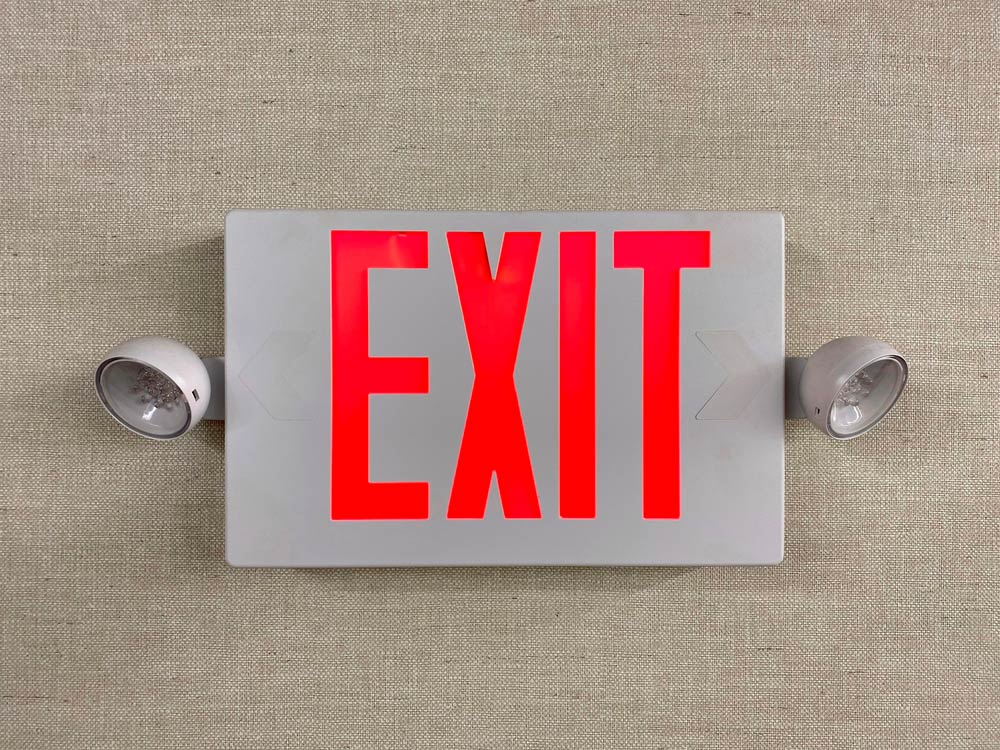
EXIT LIGHTS: A battery energizes most emergency exit lights in facilities. The device is connected to the building’s electrical supply, providing a constant charge to the battery. In the event of a power failure, circuitry in the fixture activates the lights so that occupants can see to exit a building. Most emergency lights are only designed to work for the code’s required minimum of ninety (90) minutes on battery power.
Monthly: NFPA 101 – 7.9.3.1.1 and .2 Testing of required emergency lighting systems shall be permitted to be conducted as follows: (1) Functional testing shall be conducted monthly, with a minimum of 3 weeks and a maximum of 5 weeks between tests, for not less than 30 seconds.
Annually, each light requires a minimum of ninety (90) minutes of testing on emergency power. Written records documenting the testing must be maintained and available to the AHJ.
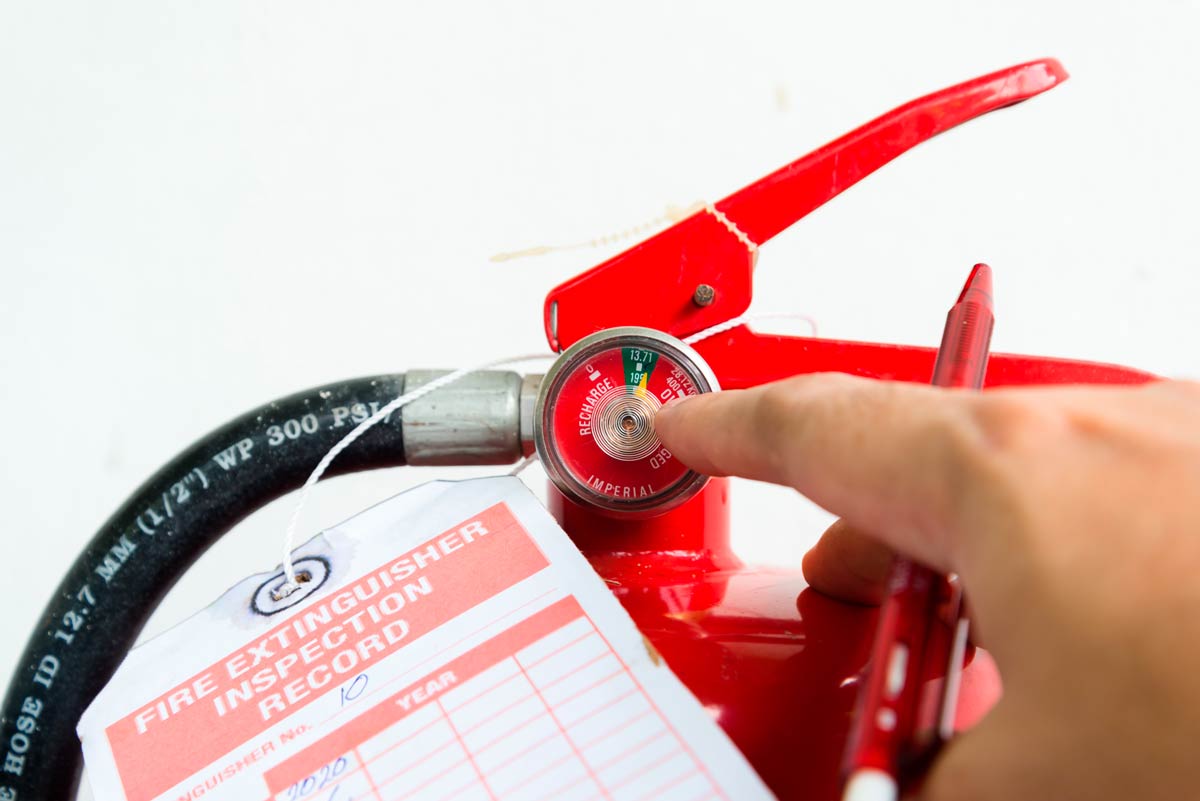
EXTINGUISHERS: NFPA 10 – 7.2 As a fire prevention effort, fire extinguishers must be checked during initial installation and every month after that, as required by the National Fire Protection Association (NFPA).
NFPA states that these monthly fire extinguisher inspections should be recorded for at least 12 months. Information such as the month and year of the inspection and the person who conducted it should be recorded on a label or electronic file. The inspections include:
- Location
- Pressure Guage
- Weight
- Safety Seals
- Physical Damage
- Hose and nozzle
How can we help you?
We are a one-stop-shop for code compliant safety services and fire protection. Feel free to contact us anytime and let's talk about how we can help!
Contact us